
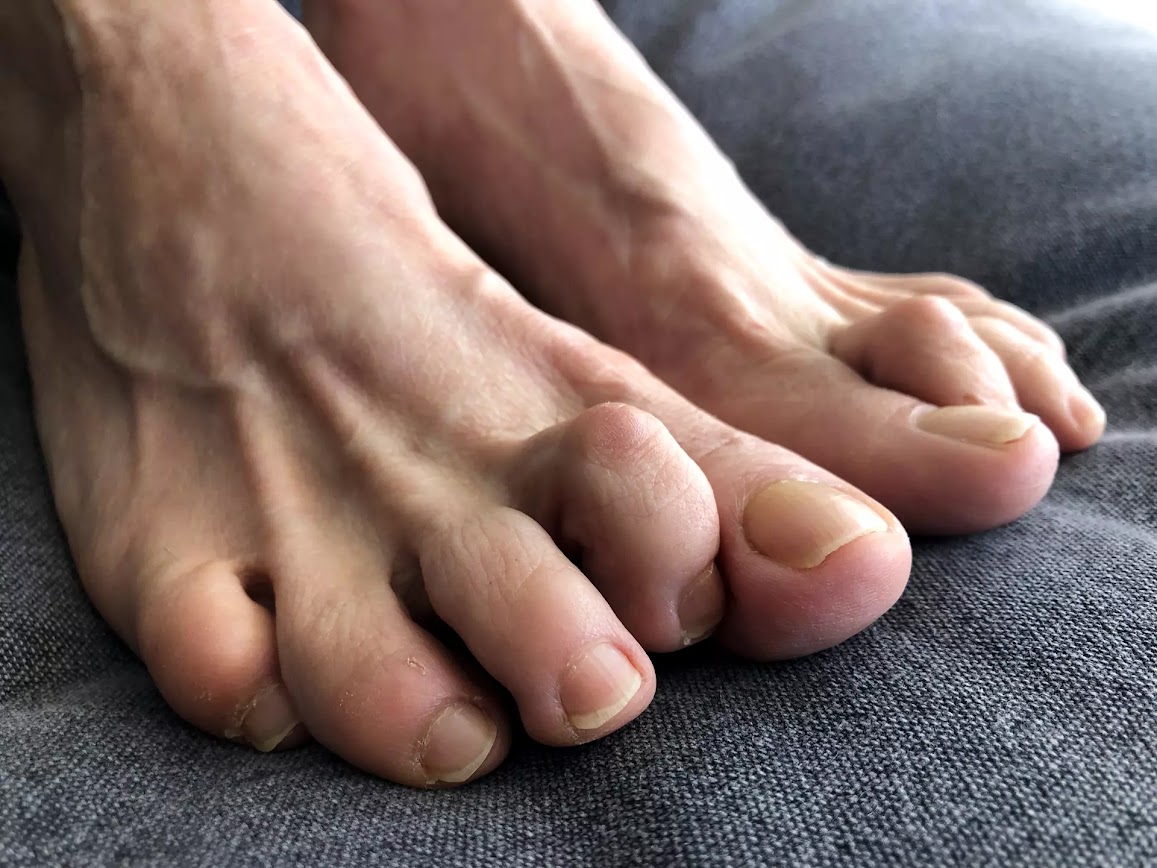
What is a Hammertoe?
A hammertoe may start small—but it can change the way you move through your day.
Imagine your toes working together in perfect balance, helping you walk, run, and stay steady. Now imagine one toe bending in the middle and staying that way, like it’s stuck. That’s a hammertoe. It usually affects the second, third, or fourth toe, causing it to curl downward at the middle joint instead of lying flat.
At first, it might not seem like a big problem. You may notice your toe looks a little different. Maybe it rubs against your shoe. Maybe it feels stiff. But over time, that small change can turn into something harder to ignore.
The top of the bent toe can rub against the inside of your shoe, causing redness, irritation, or even painful corns. The tip of the toe might press into the ground more than it should, causing a callus. Walking can become uncomfortable. Standing for long periods will feel like a challenge.
Book OnlineWhat causes hammertoes to happen?
Hammertoes are caused by muscle imbalance in the foot. When the muscles and tendons that control your toes aren’t working evenly, the toe can be pulled into a bent shape. Wearing tight or narrow shoes can make it worse by pushing the toes into unnatural positions. Injuries and certain foot structures can also play a role.
In the beginning, treatment can be simple. Wearing shoes with a wider toe box can reduce pressure. Padding can protect the toe from rubbing. Stretching exercises may help keep the joint flexible. These small changes can make a big difference early on.
But if the toe becomes stiff or painful, or if it starts to affect your daily life, it may be time to think about a more advanced solution.
Minimally invasive hammertoe surgery
This is a modern approach designed to fix the problem with precision and care. Instead of large cuts, Dr. Graham uses very small incisions—just a few millimeters long. Through these tiny openings, he gently corrects the position of the toe by releasing tendons and realigning the bones.
The goal is simple: straighten the toe, reduce pain, and restore natural movement.
Sometimes a tiny implant is used under the skin, to hold the toe in the correct position while it heals. Because the incisions are so small, there is less damage to the surrounding tissue; and that changes everything.
Less pain after surgery. Less swelling. No scars. And a faster recovery.
Patients can walk the day of the procedure using a surgical shoe. Most return to wearing athletic shoes by week 4 when isolated hammertoe procedures are performed.
When should you seek hammertoe treatment?
If your toe is painful, stiff, or difficult to move… if shoes are becoming harder to wear… or if your daily activities are being limited, it’s time to talk to a foot specialist. You don’t have to wait until the problem gets worse.
Now imagine life after minimally invasive hammertoe surgery.
Your toes rest naturally again. Your shoes fit comfortably. Walking feels smooth and easy. The pressure, the rubbing, the daily discomfort—it fades away.
You move with confidence. You stand longer. You do more of what you enjoy without thinking about your feet.
It’s not just about fixing a bent toe. It’s about restoring comfort, balance, and freedom in every step.
Minimally invasive hammertoe surgery is a smarter, simpler way forward—designed to help you feel better, move better, and get back to living your life without limits.